Utah is generally an open-range state. However, there are exceptions in some areas in the state. Hiring a livestock accident lawyer can help you answer the dilemma of: I hit a cow on the road. Who is responsible?
At Silva Injury Law, we have years of experience in fighting for the rights of injured victims. We understand the complexity of Utah livestock laws. Contact our office for a free case evaluation.
What Happens If You Hit a Cow with Your Car?
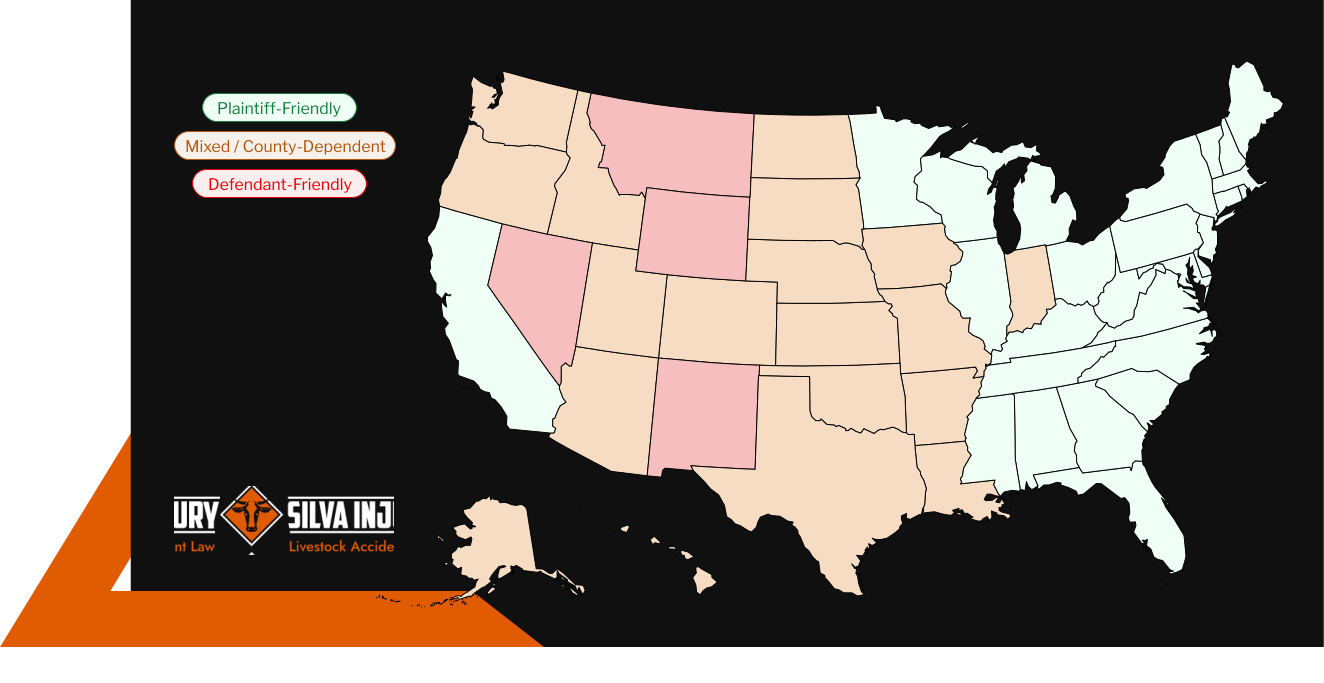
Utah follows a mix of open-range and closed-range jurisdictions. Some counties are open-range, and others are considered closed-range jurisdictions. Other counties have a mix of both. Therefore, knowing which law applies can get complicated.
While an open-range state by default, the Utah legislature gives counties the authority to pass local fencing laws. These laws mandate that livestock owners keep their livestock confined to their property, effectively making the county a closed-range jurisdiction.
Counties also have the authority to define what constitutes a lawful fence. The Utah legislature further allows each county to have different fencing regulations. Some portions of the county can follow fencing laws while others can remain open range. Counties that have adopted this “mixed” approach include:
- Sevier,
- Utah,
- Garfield, and
- Beaver.
With a patchwork of regulations, hiring a local attorney who understands the intricacies of Utah livestock laws is imperative.
Who Pays If You Hit a Cow on the Road in Utah?
Utah has specific rules in place to address what happens when a vehicle hits livestock on the road.
Under the law, a livestock owner or someone in possession of the livestock cannot willfully or negligently permit their animals to wander onto the highway if the highway has fences on both sides.
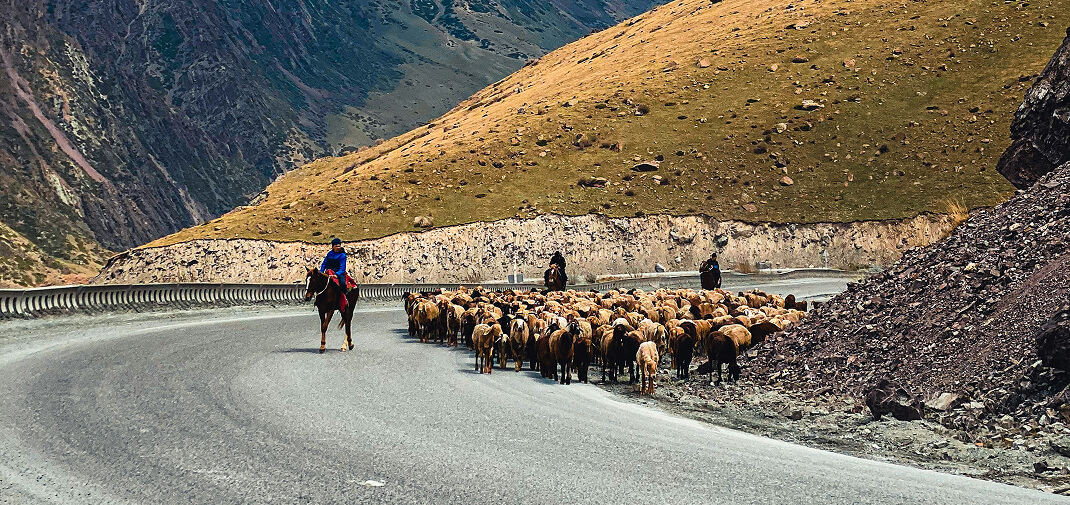
However, this rule does not apply in areas designated as open range. In those areas, livestock can still wander freely.
Highway Accidents on Closed Range
If you suffered an injury in a closed-range jurisdiction, you may be able to hold the livestock owner liable for damages. However, there is no presumption that the negligence of the owner or person in possession of the livestock caused the collision. You must prove the following:
- The negligent party owns or is in possession of the livestock. Examples include the legal owner, a rancher, or a foreman in charge of the livestock.
- A willful or negligent act. You must show that the owner or person in control of the livestock purposefully or carelessly allowed the livestock to stray onto the road.
- On the highway. The highway must be separated from property by a fence, wall, hedge, sidewalk, curb, lawn, or building.
Examples of wilful or negligent actions can include:
- Failing to construct a fence to keep in livestock,
- Leaving the fence open,
- Not addressing repeated past instances of escaped livestock,
- Failing to repair known broken fences, and
- Failing to train employees on the farm or ranch to close gates or inspect the fence for damage.
For example, suppose a cow escapes through a broken fence and causes an accident on the road. A ranch overseer may be liable for the collision if they knew about the broken fence and frequent escapes by the cows.
On the other hand, a cow that causes an accident after escaping a fenced-in area destroyed by a storm the night before would not necessarily make the rancher liable because there is no evidence that they knew about the broken fence.
Our experienced lawyers can assess the facts of your case and determine the cause of the escaped livestock.
Highway Accidents on Open Range
Utah’s livestock on highway law does not apply to open range livestock drifting onto the highway while moving to or from their range. In open range jurisdictions, livestock owners do not have a duty to prevent their livestock from straying onto the highway.
This does not mean that owners in open range jurisdictions are not liable for negligence following a collision with their livestock. However, in such cases, there is a presumption of negligence against the driver who must demonstrate that they were not negligent.
What Is the Statute of Limitations for a Livestock Accident Claim in Utah?
The statute of limitations in Utah for a livestock accident claim is four years. You have four years from the date of the accident to bring your claim. If you fail to file your claim by the deadline, the law generally bars you from recovery.
Contact the Seasoned Attorneys at Silva Injury Law
If you’ve been hurt in a livestock collision, it’s natural to feel lost and confused. Injuries caused by striking a cow in the road can uproot your life and financial security. Don’t try to handle the aftermath alone.
Every county has its own ordinances and regulations regarding open and closed ranges and livestock accidents. Our experienced legal team can help you navigate Utah’s legal system and determine if you can sue if you hit a cow with your car.
Contact Silva Injury Law today for a free case evaluation.
Resources:
- Fencing of Livestock, Beaver County, UT Code of Ordinance, link.
- Collision with Animals, Garfield County, UT Code Ordinance, link.
- Requirements for Keeping Animals, Morgan County, UT Code of Ordinance, link.
- Control and Fencing of Livestock, Salt Lake County, UT Code of Ordinance, link.
- Accident Responsibilities; Livestock on Highways, Sevier County, UT Code of Ordinance, link.
- Livestock, Utah County Code § 5.01.190, link.
- Within four years, Utah Code § 78B-2-307 (2023), link.