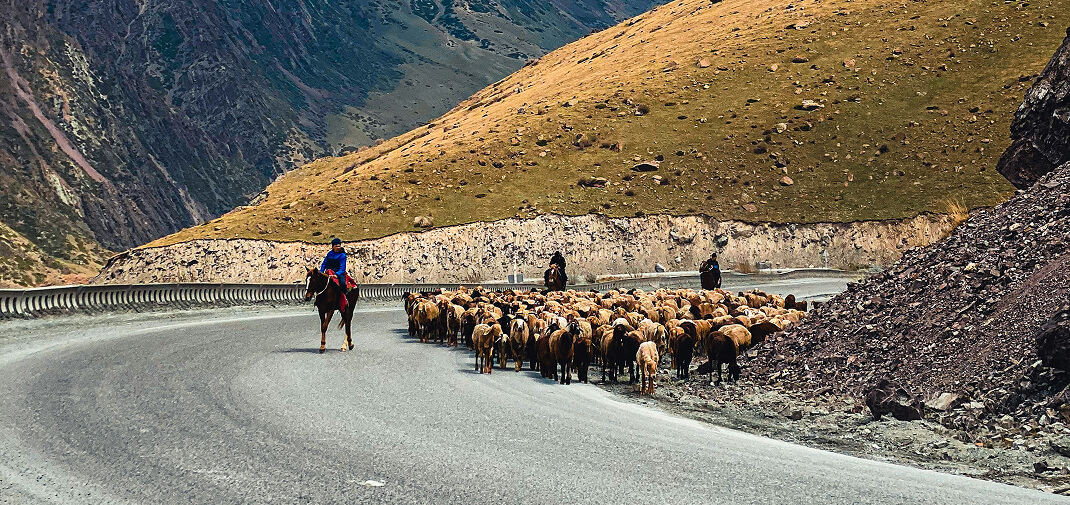

Drives on rural roads upstate or through the Hudson Valley are scenic, but they also present unique hazards that city drivers rarely experience. One moment, the road is clear, and the next, a massive cow (or two) roams into your lane. An impact creates instant chaos. There’s shattered glass, a destroyed vehicle, and the terrifying realization that you have just collided with a 1,500-pound animal.
In the immediate aftermath, the questions pile up faster than the medical bills can be paid. You need to know who pays if you hit a cow on the road in New York and whether you are left footing the bill for an accident you didn’t cause.
What Happens If You Hit a Cow with Your Car?
Historically, recovering damages from livestock collisions was challenging. For decades, courts applied a “strict liability” rule known as “vicious propensity.” This standard required the victim to prove that the farmer knew the cow was aggressive (e.g., it had attacked someone before). If the victim could not, the farmer wasn’t liable, even if the cow was wandering on a highway.
This standard changed with the 2013 Hastings v. Sauve decision. The Court of Appeals determined that a livestock owner may be liable if they negligently fail to restrain their animals, such as by neglecting fence repairs or leaving gates unsecured. Liability now centers on whether the owner took reasonable precautions to prevent escape, not on whether the animal had a history of aggression.
Recent jurisprudence has also expanded liability in New York beyond the initial accident. In 2016, the Court of Appeals expanded farmer liability to include foreseeable consequences of animals getting loose. In its decision, the Court held a farmer liable where a driver was killed after stopping her car to help a calf that had escaped and wandered onto a rural road at night. The Court found that the farm could be responsible because it is foreseeable that, if a farmer negligently lets an animal loose, drivers will stop to help, thereby putting themselves in danger.
Therefore, if a loose farm animal caused a chaotic chain reaction, such as swerving cars and secondary crashes, the livestock owner may be held responsible for the resulting consequences.
Does Location Matter? NYC vs. Rural Counties
While the negligence standard applies statewide, the evidence you use to prove that negligence changes depending on where the accident occurred:
- In New York City. Livestock is generally prohibited under Article 161 of the NYC Health Code. If you hit a cow in the Bronx, the owner is likely liable immediately because the animal’s presence there is illegal to begin with.
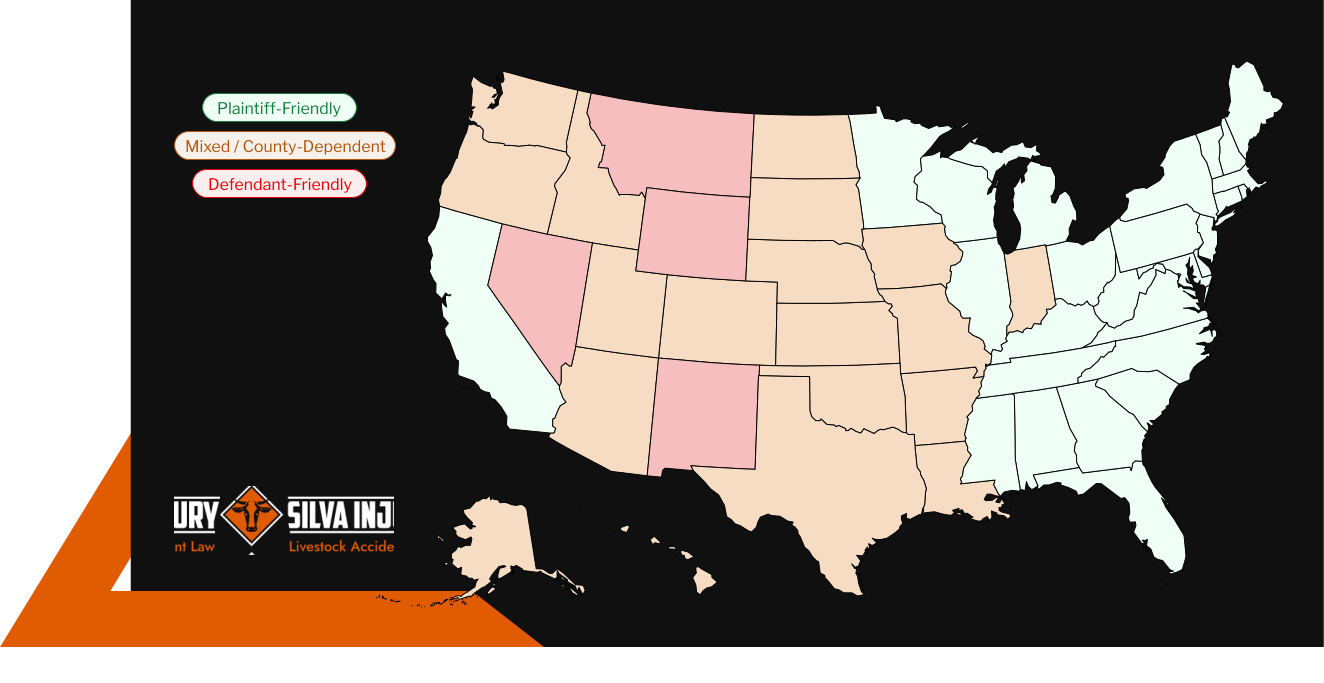
- In rural towns. New York is a “fence-in” state. We do not have “open range” laws like Montana or Texas, where cattle can legally roam public roads, including highways. Here, every livestock owner has a duty to contain their animals.
Although state law is uniform, individual towns such as Sullivan or Kingston have specific “running at large” ordinances. Where a livestock owner violates these ordinances by permitting animals to roam, such a violation can serve as compelling evidence of negligence.
Proving Negligence in New York
After an accident, you are likely asking, “If I hit a cow on the road, who is responsible in NY?” Liability depends on the facts and evidence. New York generally requires owners to prevent livestock from running at large, and failure to maintain barriers is a key indicator of negligence. Some counties permit open grazing for livestock under specific criteria.
Key evidence for establishing negligence can include:
- Signs of deteriorated fencing or rusted wire, indicating long-term neglect;
- Gates left unlocked, unlatched, or lacking proper mechanisms;
- Documented history of animal escapes from neighbors or local authorities;
- Pasture boundaries located too close to busy roads;
- Ignored local ordinances regarding livestock containment; and
- Insufficient food, water, or shelter leading the animals to roam.
These details help show that the collision was preventable and not a random act of nature. So, can you sue if you hit a cow in NY? Yes, if the evidence shows the owner’s negligence caused the accident.
What Damages Can You Recover?
Cow-vehicle collisions can have severe consequences. Given a cow’s size and build, these accidents often cause substantial vehicle damage and increase the potential for serious injuries. Understanding what compensation you may be eligible for is key to planning your next steps. Depending on the circumstances of your accident and injuries, you may be able to recover:
- Medical and rehabilitation costs—emergency treatment, surgeries, and long-term therapy;
- Pain and suffering—compensation for physical and emotional distress;
- Lost income—wages lost during hospitalization or recovery; and
- Vehicle replacement—most vehicles are damaged beyond repair.
New York follows a comparative negligence framework that allows you to recover damages even if you share some responsibility. For example, if you were slightly exceeding the speed limit, you may still be eligible for compensation, but it will be reduced by your percentage of fault.
Work with Silva Injury Law
At Silva Injury Law, we recognize that a crash of this nature can upend your daily life. Our commitment extends beyond achieving strong legal results. Our nationwide coverage prioritizes providing honest and respectful support, working to resolve problems rather than escalating conflict.
You should be focused on healing, not arguing with an insurance adjuster about fence laws. We handle the investigation, paperwork, and legal processes, allowing you to concentrate on regaining peace of mind.
Collisions with livestock are sudden, dangerous, and financially overwhelming. Understanding who pays if you hit a cow on the road in NY, and securing legal support, can make the difference between bearing the costs alone or recovering fair compensation. Let us take the weight of this case off your shoulders.
Frequently Asked Questions
Does My Car Insurance Cover Accidents with Livestock?
Typically, the comprehensive coverage of your auto insurance covers collisions with animals. However, this usually addresses only vehicle repairs. Medical costs, lost income, or pain and suffering generally require a separate liability claim against the livestock owner’s insurance.
Can I Sue If the Owner Lacks Insurance?
Yes, though recovery may be more complicated. Personal injury claims can target the owner personally if insurance is insufficient. Early consultation with an attorney helps preserve options.
Resources:
- National Agricultural Law Center. Statutes of New York – Fence Law, link
- New York Legislature. CPLR § 1411, link
- New York State Department of Motor Vehicles. Chapter 12: If You Are in a Traffic Crash, link
Silva Injury Law is licensed in California and Utah. For cases outside these jurisdictions, we work with local counsel or refer cases as appropriate.