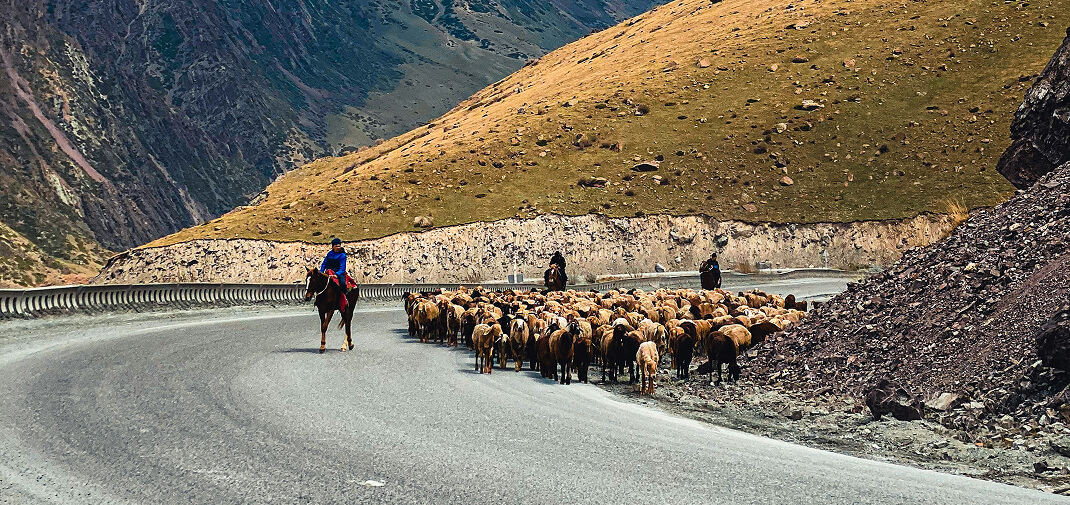

I hit a cow on the road. Who is responsible?
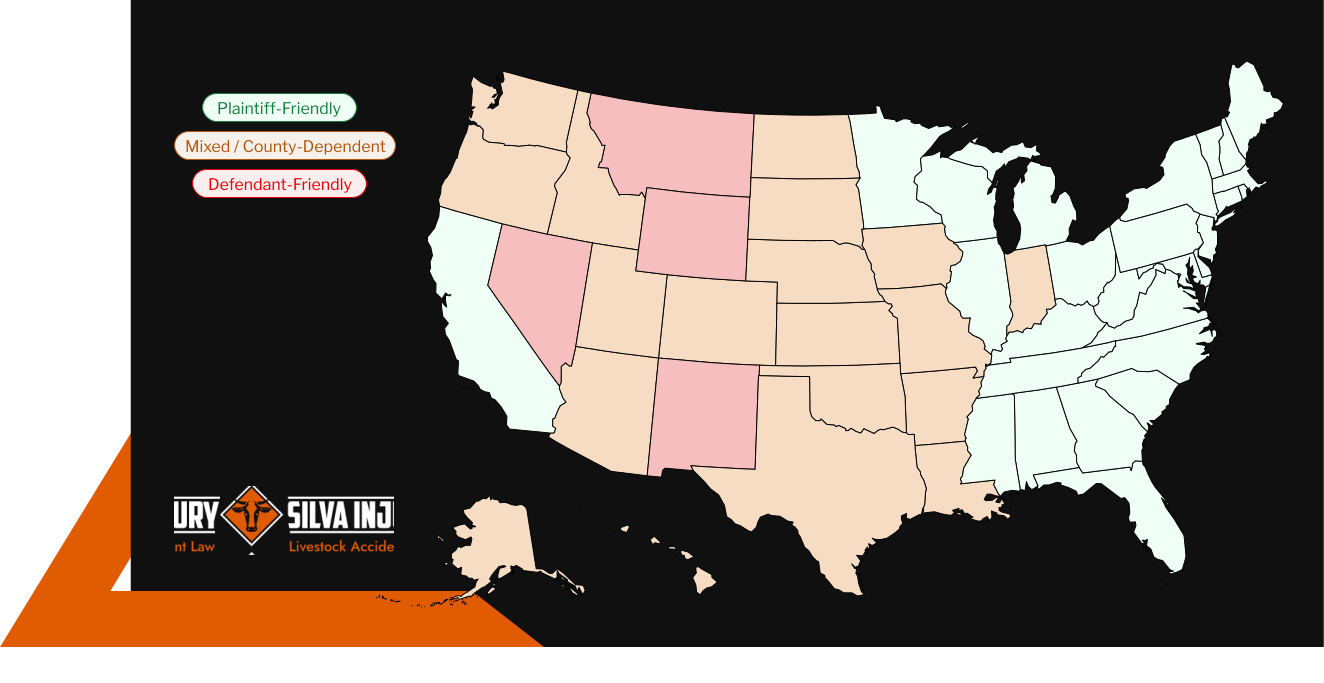
Determining who you can sue if you hit a cow depends on state law.
California is mostly a fenced-in state. Any person who owns or controls livestock must not let the livestock stray or remain unaccompanied on a public highway if the highway is:
- Next to the property on both sides and
- Separated from the highway by a fence, wall, hedge, sidewalk, curb, lawn, or building.
Owners who fail to contain their cows or other livestock may be liable for accidents caused by their animals on the road.
The law aims to prevent vehicle accidents caused by livestock straying onto the highway.
What Happens If You Hit a Cow with Your Car in California?
When someone is injured in a livestock accident, the law does not automatically hold the livestock owner accountable. In California, there is no presumption of negligence on the part of the owner. You must prove it by providing evidence for each of the following four elements:
- Duty. California livestock owners have a duty to keep their livestock secure to prevent them from straying onto a public highway.
- Breach. You must prove the livestock owner did not meet this duty, such as failing to fix a broken fence or leaving a gate open.
- Causation. You must connect the livestock owner’s breach to the livestock wandering past the fence.
- Damages. You must have suffered actual harm in the accident.
At Silva Injury Law, our legal team examines all evidence to connect the owner’s actions to your injuries.
Are There Exceptions to California’s Fenced-in Law?
Yes. By default, California follows the fenced-in rule. However, some counties follow open-range laws, allowing livestock to graze. State law designates the following counties as open range:
- Portions of Trinity,
- Portions of Shasta,
- Siskiyou,
- Lassen, and
- Modoc.
California also allows the board of supervisors of a county not designated as an open range county in the California Food and Agriculture Code to elect to devote their land to grazing. For example, the following counties are also open range counties, in whole or part:
- Amador,
- Portions of Tehama,
- Portions of Plumas, and
- Portions of Kern.
In counties designated as open range, livestock owners do not have a duty to fence in their livestock. Instead, the duty rests on other landowners to build a fence around their property to keep out wandering livestock.
Can You Sue If You Hit a Cow in a County That Follows the Open Range Rule in California?
Generally, if a livestock escapes and causes an injury, the livestock owner cannot be held liable for any injuries.
However, courts have recognized that even in open range jurisdictions, the injured driver may still have a claim. In the 1994 case Shively v. Dye Creek Cattle Co., the court held that a livestock owner in an open-range area can be held liable for injuries caused by their wandering livestock.
In that case, Shively sued Dye Creek Cattle Company (Dye Creek), the livestock owner, for the injuries suffered after hitting the owner’s black Angus bull on a state highway in Lassen County. Dye Creek maintained that it should not be responsible because the accident occurred in an open range county, and it was not required to fence in its livestock.
The court held that open-range laws did not offer immunity for livestock owners from collisions on public highways. Livestock owners are still subject to the general duty to exercise reasonable care that is also codified in California law. Just because owners do not have to fence their livestock, that does not mean they do not still have to manage it with ordinary care.
Dye Creek was aware of the excessive number of cattle-vehicle accidents on the highway and, therefore, should have implemented measures to prevent such accidents.
What does this mean for livestock owner liability in open range counties?
You may still be able to hold owners responsible for an accident caused by their livestock that strayed onto the highway. While owners do not need to keep their animals in a fenced perimeter, they must take reasonable care to prevent animals from causing accidents on highways.
How Long Do I Have to Bring a Livestock Accident Claim?
You don’t have forever to bring a livestock claim. Like other personal injury claims, you have two years from the date of the accident to file a claim against the negligent livestock owner for compensation. You are generally barred from recovery if you fail to file a claim by the deadline.
Contact Silva Injury Law Today
Don’t try to handle the aftermath of a livestock accident alone. If you hit a cow on the road and were injured, you may have grounds to sue the livestock owner if they failed to keep their cows within the perimeter of their property.
At Silva Injury Law, we represent injured Californians in livestock accident cases. We are familiar with county livestock laws and understand court procedures. We will help you collect evidence, identify who pays if you hit a cow on the road, and negotiate with insurance companies.
Contact us today to schedule a free consultation. We’ll explain your legal options and help you get control of your life.
Resources:
- Cal. Civ. Proc. Code § 335.1 (2003), link.
- Cal. Civ. Proc. Code § 1714 (2012) link.
- Cal. Food & Ag. Code § 17124 (1967), link.
- Open Range, County of Amador, CA Municipal Code Chapter 8.40, link.
- Estrays Kern County, CA Ordinance Chapter 7.16, link.
- Open Range Ordinance, Tehama County Board of Supervisors, link.
- Open-range areas declared, Plumas County, CA Municipal Code Sec. 9-6.01, link.
- Shively v. Dye Creek Cattle Co., 29 Cal. App. 4th 1620 (1994), link.
- Livestock at large prohibited—Exceptions, Tehama County, CA Code of Ordinance, 7.25.060, link.