Being involved in an Arizona livestock accident can turn your world upside down. Suddenly, you’re facing extensive medical expenses, lost wages, and mounting utility bills. But you don’t have to handle this alone.
At Silva Injury Law, our seasoned lawyers will help you understand what happens if you hit a cow in Arizona.
Read on to learn more about who pays if you hit a cow on the road, how to prove your claim, and how long you have to file your lawsuit.
Who Pays If You Hit a Cow on the Road?
Generally, the livestock owner is the one held responsible if you hit a cow. But whether you can sue them depends on the facts of the case and where the accident occurred.
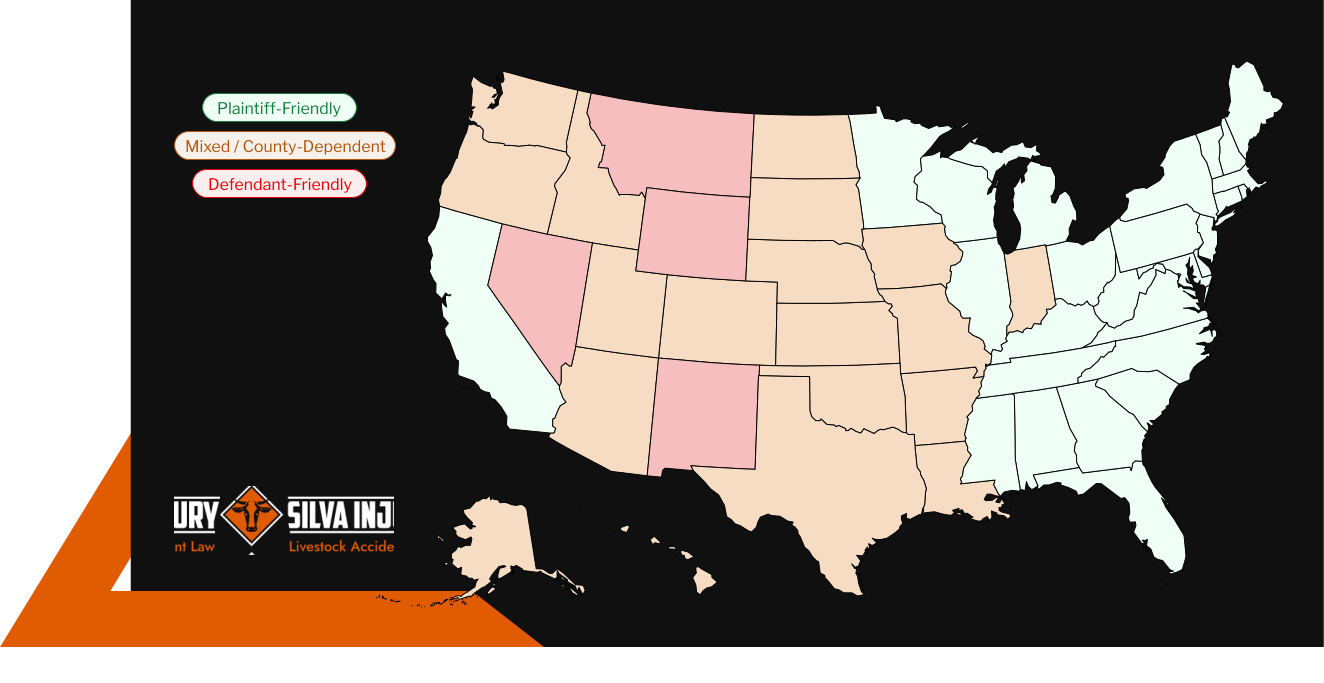
Arizona has a mix of open range and “no-fence” districts. By default, Arizona is considered an open range state. However, the law permits districts to elect to become “no-fence” districts by petitioning the county board of supervisors in which they are located.
Open Range Districts
In open-range districts, livestock owners do not have to fence their animals. Their animals are free to roam the lands. Historically, under common law, livestock owners did not owe a duty to motorists on the road.
However, Arizona courts have held that, even in open-range jurisdictions, livestock owners owe a duty of ordinary care to motorists on public highways.
Failing to prevent the livestock from roaming onto the highway is not enough. The injured motorist must identify specific actions or inactions by the livestock owner that caused the damages. This behavior may include:
- Lack of supervision or control over the livestock,
- Failure to appropriately supervise employees on the property, or
- Evidence of past incidents that occurred under similar circumstances.
Your livestock accident lawyer can help you establish this evidence, review your damages, and calculate your losses.
No-Fence Districts
While most districts are open range, some are designated as no-fence. Property owners are required to fence their property to keep wandering livestock out, as they are in an open-range jurisdiction.
Livestock owners are required to fence in their property to keep their livestock from wandering in designated no-fence districts.
If you were in an accident with livestock in Arizona, you must provide evidence of the following:
- The accident took place in a no-fence district where the livestock owner had a duty to fence their livestock,
- The livestock were not fenced in or escaped due to the owner’s negligence, and
- You suffered damages.
Note that Arizona law also states that livestock owners who let their livestock roam at large in a no-fence district are guilty of a class 2 misdemeanor and may be liable for trespass-related damages.
What If I Am Partly At-Fault for the Accident?
Even if you were partly at fault for the accident, you are still permitted to pursue your livestock accident claim. Arizona is a pure comparative negligence state. Your portion of the fault will reduce the amount of recoverable compensation.
For example, if you suffer $50,000 in damages after your car hits a cow, but are found to be 30% at fault, you can still recover $35,000.
How Much Compensation Can I Recover for an Accident Involving Livestock in Arizona?
The amount of recoverable compensation depends on the factors of your case, which include:
- Severity of your injuries,
- Time missed at work,
- Strength of the evidence,
- Long-term symptoms, and
- Effect on daily life.
An experienced livestock accident attorney will analyze all aspects of your case to calculate your compensation accurately.
Medical Expenses
Recoverable medical expenses include:
- Doctor visits,
- Surgeries,
- ER stays,
- Prescriptions,
- Diagnostic testing,
- Physical therapy,
- Counseling, and
- Assistive devices.
Save all related medical documents and bills. These records will be irreplaceable for calculating your damages.
Lost Wages
After the crash, you may lose time at work. Depending on your injuries, this time off can mean a few days to several weeks or months. You may recover these missed wages.
Reduced Earning Capacity
Your injuries may affect your ability to perform your job. You may have to work fewer hours, temporarily or permanently, or take a lower-paying job. If so, you may be able to recoup the difference.
If you are unable to work, you may also be able to recover the loss of income.
Pain and Suffering
Pain and suffering damages refer to the physical pain and emotional pain of being the victim of an accident.
Loss of Enjoyment of Life
Some injuries interfere with your ability to enjoy the things you used to, such as playing with your children, cycling, or playing an instrument. If you no longer have any interest in life or your hobbies, you may be able to recover compensation.
How Long Do I Have to File an Arizona Livestock Claim?
You have two years after the date of the accident to file your claim. If you fail to file by this deadline, you generally lose your right to recover.
Seeking guidance from an attorney is imperative to protect your rights. Further, evidence can change or disappear. The sooner it is collected, the better.
Contact a Livestock Accident Attorney and Learn If You Can Sue If You Hit a Cow
Knowing what happens if you hit a cow in Arizona is essential. State laws are complex, and navigating the court system alone can be difficult. At Silva Injury Law, we’ll take care of everything.
Our experienced legal team will push back against unfair insurance tactics, fighting to ensure your rights are protected.
We operate on a contingency fee, so you don’t pay anything up front. You only pay if we win your case. If you get nothing, you owe us nothing.
Contact Silva Injury Law for a free case evaluation. We’ll analyze your facts and explain your legal options so you can make an informed decision.
Silva Injury Law is licensed in California and Utah. For cases outside these jurisdictions, we work with local counsel or refer cases as appropriate.